
Beyond Blame: Tripod Beta Incident Investigation Training for DIALOG
Every workplace incident tells a story. While many organisations focus on identifying who made the mistake, the real opportunity lies in understanding why the incident happened. Effective incident investigation is not about assigning blame, it is about preventing recurrence.
BLOG
When a workplace incident occurs, one of the first questions often asked is: “Who made the mistake?”
However, identifying an individual to blame does not necessarily prevent the same incident from happening again. Behind every action or decision, there may be unclear procedures, ineffective risk controls, communication gaps, excessive workloads, insufficient training or deeper organisational weaknesses.
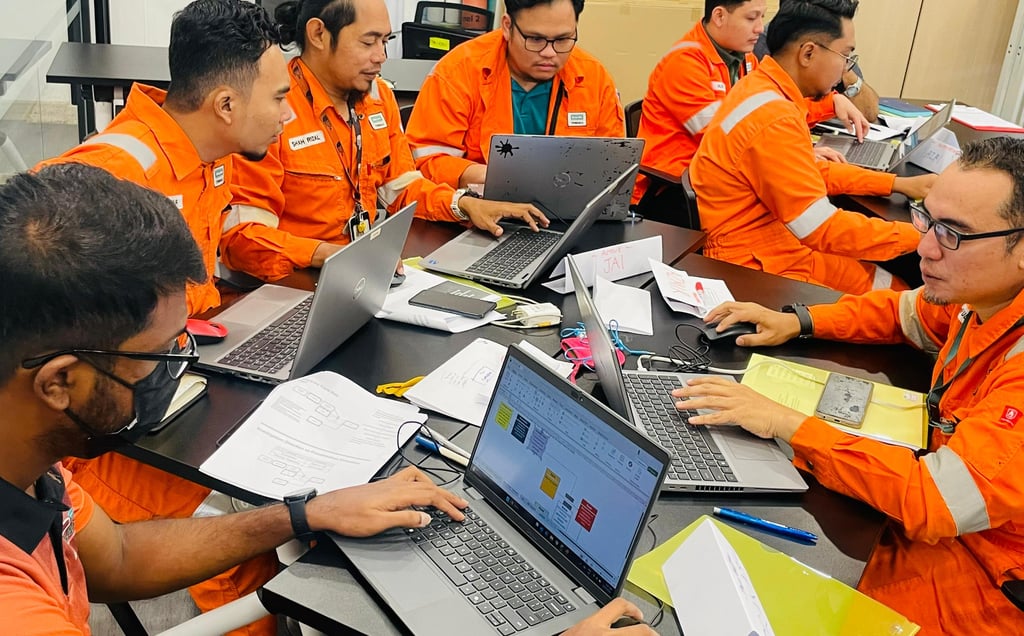
To strengthen its team’s capability in conducting systematic and evidence-based incident investigations, DIALOG engaged Bayu Ignitra Sdn Bhd to deliver the Incident Investigation Using Tripod Beta training programme in Johor.
The programme introduced participants to an investigation approach that moves beyond individual error. Instead, it focuses on understanding what happened, how the incident was allowed to occur and why the organisation’s existing controls or systems failed to prevent it.
Why must incident investigations go deeper?
In complex working environments, particularly those involving operations, maintenance, engineering and safety, an incident is rarely caused by one factor alone.
Human error may be the final visible action before an incident occurs. However, that action may have been influenced by several workplace conditions, including:
Unclear instructions or responsibilities;
Procedures that are difficult to follow;
Inadequate equipment or safety controls;
Time pressure and excessive workloads;
Weak supervision;
Ineffective communication between teams;
Insufficient competency or training; and
Weaknesses within the organisation’s management system.
When an investigation ends with the conclusion of “human error”, the organisation may respond by issuing a warning, conducting refresher training or taking action against the individual concerned.
Although these actions may sometimes be necessary, they may not address the system weaknesses that contributed to the incident. If the underlying factors remain unresolved, a similar incident may happen again—possibly involving a different employee.
This is where the Tripod Beta methodology provides a more comprehensive perspective.
What is Tripod Beta?
Tripod Beta is a barrier-based incident investigation and analysis methodology. It helps investigators identify the sequence of events, the risk controls that failed or were missing, the factors that influenced human performance and the deeper organisational weaknesses that contributed to an incident.
According to the official Tripod and Energy Institute guidance, Tripod Beta focuses on three fundamental questions.
1. What happened?
The investigation team develops a clear sequence of events based on available facts and evidence. This includes identifying the conditions before the incident, the actions taken, the changes that occurred and the resulting consequences.
Developing an accurate timeline allows investigators to understand how one event led to another without jumping to conclusions too early.
2. How did it happen?
At this stage, investigators identify the barriers or risk controls that should have prevented the incident.
These barriers may include:
Engineering controls;
Operating procedures;
Permit-to-work systems;
Inspection and maintenance programmes;
Warning or alarm systems;
Supervision;
Personal protective equipment; and
Employee competency and training.
The investigation team then assesses whether each barrier failed, was inadequate, was missing or did not operate effectively when it was needed.
3. Why did it happen?
Tripod Beta takes the investigation to a deeper level by examining three layers of causation:
Immediate Cause – The action, omission or decision directly associated with the failure of a barrier;
Preconditions – The circumstances that influenced the action or decision, such as fatigue, workload, time pressure, the working environment, communication or insufficient knowledge; and
Underlying Causes – Organisational factors involving management systems, leadership, culture, planning, training and risk management.
This approach helps an organisation understand that human behaviour does not occur in isolation. Workplace decisions are often influenced by the conditions and organisational systems surrounding the individual.
Key learning areas covered during the programme
Throughout the training, participants were guided through the key principles and practical processes required to conduct a structured incident investigation.
Building an evidence-based incident timeline
Participants learned how to organise information and establish a clear sequence of events. This is essential for separating confirmed facts from assumptions, opinions and unverified information.
A well-developed timeline also helps investigators identify missing information and determine where further evidence or interviews may be required.
Identifying failed or missing barriers
Participants explored the controls that should have interrupted the incident sequence. They also examined why those controls did not provide the intended level of protection.
This shifts the focus from simply asking what an employee did wrong to assessing how effectively the organisation’s risk controls operated in practice.
Recognising preconditions and organisational factors
The investigation does not stop at the actions of the individuals involved. Participants were encouraged to examine workplace conditions, performance-influencing factors and organisational weaknesses that may have shaped those actions.
This helps the investigation team understand the wider context in which decisions were made.
Developing effective corrective actions
Corrective actions should address the actual causes of an incident rather than merely treating its visible symptoms.
Effective actions should be practical, clearly assigned, measurable and capable of reducing the likelihood of recurrence. They may involve improving procedures, strengthening engineering controls, clarifying responsibilities, redesigning work processes or improving organisational oversight.
This enables organisations to move beyond generic recommendations such as “remind employees to be careful” or “conduct refresher training” and implement stronger, more sustainable improvements.
Building a learning culture instead of a blame culture
One of the most important messages of the programme was that an incident investigation should not become an exercise in finding someone to blame.
Its primary purpose is to discover lessons that can make the workplace safer.
When employees fear punishment, important information may be withheld. They may be reluctant to discuss operational challenges, procedural weaknesses or mistakes that could provide valuable learning opportunities.
A fair, evidence-based investigation encourages people to speak openly about what happened and why. This creates opportunities for the organisation to identify weak signals before they contribute to another incident.
Moving away from blame does not mean removing accountability. Accountability remains important, but it should be supported by a balanced understanding of individual actions, workplace conditions and organisational responsibilities.
How Tripod Beta benefits an organisation
Applying the Tripod Beta methodology can help organisations to:
Conduct investigations in a more structured and consistent manner;
Avoid premature or unsupported conclusions;
Understand the relationship between people, risk controls and organisational systems;
Identify immediate, contributing and underlying causes;
Develop more targeted corrective actions;
Strengthen operational and safety controls;
Improve organisational learning across departments; and
Reduce the likelihood of similar incidents recurring.
The methodology is particularly relevant to HSE personnel, incident investigators, supervisors, engineers, operations teams, managers and individuals responsible for workplace safety and risk management.
Bayu Ignitra’s commitment to industry-focused training
The delivery of the Incident Investigation Using Tripod Beta programme for DIALOG reflects Bayu Ignitra’s commitment to providing practical, relevant and workplace-focused training.
We believe that an effective investigation should do more than produce a report. It should generate meaningful learning, strengthen risk controls and enable management to make better-informed decisions.
The programme may be conducted over one or two days, either face-to-face or virtually. Its content, case studies and learning activities can also be customised according to an organisation’s operations, risk profile and training requirements.
Strengthen your team’s incident investigation capability
Is your team ready to move beyond the question of “Who was at fault?” and begin asking the more valuable questions: “Why did the system fail, and what needs to be improved?”
Contact Bayu Ignitra Sdn Bhd to discuss a customised Incident Investigation Using Tripod Beta programme for your organisation.
Bayu Ignitra Sdn Bhd
📞 +60 14-615 5193
📧 admin@bayuignitra.com
🌐 www.bayuignitra.com
This program is claimable under HRD Corp; any changes are subject to program registration, approval, and applicable terms and conditions.