
Beyond Blame: Improving Workplace Safety Through Lead Investigation Using the Tripod Beta Method
Every workplace incident tells a story. While many organisations focus on identifying who made the mistake, the real opportunity lies in understanding why the incident happened. Effective incident investigation is not about assigning blame, it is about preventing recurrence.
BLOG
Every workplace incident tells a story. While many organisations focus on identifying who made the mistake, the real opportunity lies in understanding why the incident happened. Effective incident investigation is not about assigning blame—it is about preventing recurrence.
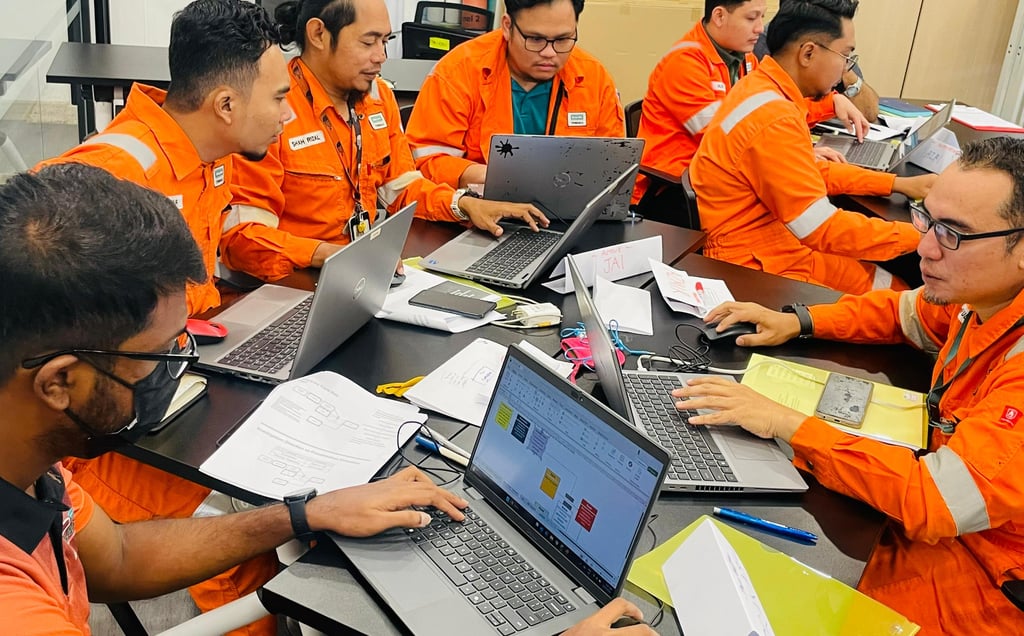
Bayu Ignitra Sdn. Bhd. recently conducted a Lead Investigation Using the Tripod Beta Method training programme for professionals from DIALOG Group in Johor, equipping participants with internationally recognised techniques to investigate incidents systematically and identify the underlying organisational weaknesses that contribute to accidents.
This paper explores the importance of structured incident investigations, explains the principles of the Tripod Beta Method, and discusses how organisations can build a stronger safety culture by focusing on root causes rather than human error alone.
Introduction
In industries such as oil and gas, petrochemical, manufacturing, logistics, construction, and utilities, operational excellence depends on maintaining a safe working environment. Despite significant investments in safety systems, incidents continue to occur due to a combination of human, technical, and organisational factors.
Traditional investigations often conclude with statements such as:
Operator failed to follow procedure.
Worker made an incorrect decision.
Human error caused the accident.
While these findings may be factually correct, they rarely answer the most important question:
Why was the error possible in the first place?
Without understanding the underlying causes, organisations risk repeating the same incidents.
Moving Beyond Human Error
Research consistently shows that human error is usually the final event, not the root cause.
Behind every unsafe act are multiple organisational factors, including:
Inadequate procedures
Poor supervision
Insufficient competency
Ineffective communication
Equipment design issues
Maintenance deficiencies
Production pressure
Weak safety culture
The Tripod Beta Method provides investigators with a structured framework to uncover these hidden causes.
Understanding the Tripod Beta Method
Tripod Beta is an internationally recognised incident investigation methodology developed from extensive research into major industrial accidents.
Rather than stopping at identifying human error, the methodology investigates the organisational systems that allowed unsafe conditions to exist.
The approach recognises that incidents occur when hazards are not adequately controlled by effective barriers.
When these barriers fail, an incident becomes possible.
Investigators therefore examine:
What happened?
Which barriers failed?
Why did they fail?
Which organisational weaknesses contributed to the failure?
What improvements are needed to prevent recurrence?
This systems-thinking approach produces far more effective corrective actions than simply retraining employees or issuing disciplinary action.
The Tripod Beta Investigation Process
A structured investigation typically includes the following stages:
1. Incident Reconstruction
Investigators gather evidence to establish an accurate sequence of events.
Evidence may include:
Witness interviews
Photographs
CCTV footage
Equipment inspection
Maintenance records
Work permits
Procedures
Training records
The objective is to understand the complete timeline.
2. Identifying Failed Barriers
Every organisation has barriers designed to prevent incidents.
Examples include:
Safe Work Procedures
Lock-Out Tag-Out (LOTO)
Personal Protective Equipment
Engineering Controls
Permit-to-Work Systems
Competency Training
Supervision
Preventive Maintenance
The investigation identifies which barriers were missing, inadequate, or failed during the incident.
3. Identifying Unsafe Acts and Unsafe Conditions
Rather than blaming individuals, investigators identify the immediate actions and conditions involved.
Examples include:
Unsafe Acts
Incorrect valve operation
Failure to isolate equipment
Incorrect lifting technique
Unsafe Conditions
Poor lighting
Equipment malfunction
Defective safety device
Inadequate signage
These are treated as symptoms rather than final conclusions.
4. Identifying Basic Risk Factors
Tripod Beta examines organisational weaknesses known as Basic Risk Factors (BRFs).
Examples include:
Design
Maintenance Management
Procedures
Communication
Training
Competence
Housekeeping
Defences
Organisation
Hardware
Error-Enforcing Conditions
Incompatible Goals
These factors explain why barriers failed.
5. Developing Corrective Actions
Corrective actions should strengthen organisational systems rather than simply addressing individual behaviour.
Examples include:
Instead of:
"Retrain operator."
A stronger recommendation would be:
Redesign work procedures.
Improve equipment labelling.
Review maintenance schedules.
Strengthen supervision.
Improve shift handover communication.
Enhance competency assessment.
Benefits of Using Tripod Beta
Organisations implementing the Tripod Beta Method often experience significant improvements in safety performance.
These include:
Improved Root Cause Identification
Investigators identify systemic weaknesses rather than superficial causes.
Better Corrective Actions
Recommendations become practical, measurable, and sustainable.
Stronger Safety Culture
Employees recognise that investigations aim to improve systems rather than assign blame.
This encourages greater transparency and reporting.
Regulatory Compliance
Structured investigations support compliance with occupational safety regulations and demonstrate due diligence.
Organisational Learning
Lessons learned are shared across departments to prevent similar incidents elsewhere.
Case Experience: DIALOG Johor
Bayu Ignitra Sdn. Bhd. recently delivered Lead Investigation Using the Tripod Beta Method training for professionals at DIALOG in Johor.
The programme combined theory with practical investigation exercises, enabling participants to:
Understand Tripod Beta principles
Analyse real-life incident scenarios
Identify failed barriers
Recognise organisational risk factors
Develop evidence-based corrective actions
Conduct structured incident investigations confidently
Interactive discussions and case studies reinforced the importance of looking beyond immediate causes and adopting a systems-based approach to workplace safety.
This practical approach supports organisations in strengthening investigation capability and promoting continuous improvement across their operations.
Building a Proactive Safety Culture
Incident investigation should not be viewed as an administrative requirement after an accident.
Instead, it should become a strategic tool for organisational learning.
High-performing organisations continuously ask:
What can we learn?
Which systems need improvement?
How can we prevent recurrence?
This mindset transforms investigations into opportunities for continuous improvement.
Conclusion
Every incident represents an opportunity to improve organisational resilience.
The Tripod Beta Method enables organisations to investigate incidents systematically, uncover hidden organisational weaknesses, and implement meaningful improvements that reduce future risk.
By focusing on failed barriers and organisational factors instead of individual blame, companies strengthen both operational performance and workplace safety.
As industries continue to pursue operational excellence, structured investigation methodologies such as Tripod Beta remain an essential component of effective risk management and sustainable safety performance.
About Bayu Ignitra Sdn. Bhd.
Bayu Ignitra Sdn. Bhd. is an HRD Corp-certified training provider delivering professional development programmes across Malaysia. Our expertise includes workplace safety, leadership, communication, logistics, artificial intelligence (AI), and technical competency development. We work closely with organisations to deliver practical, industry-relevant training that strengthens workforce capability and supports long-term organisational success.
To learn more about our customised corporate training programmes or to discuss Lead Investigation Using the Tripod Beta Method training for your organisation, contact us:
Email: bayuignitra@gmail.com | admin@bayuignitra.com
Phone: +60 14-615 5193
Website: www.bayuignitra.com